Building Biomimetic Vessels
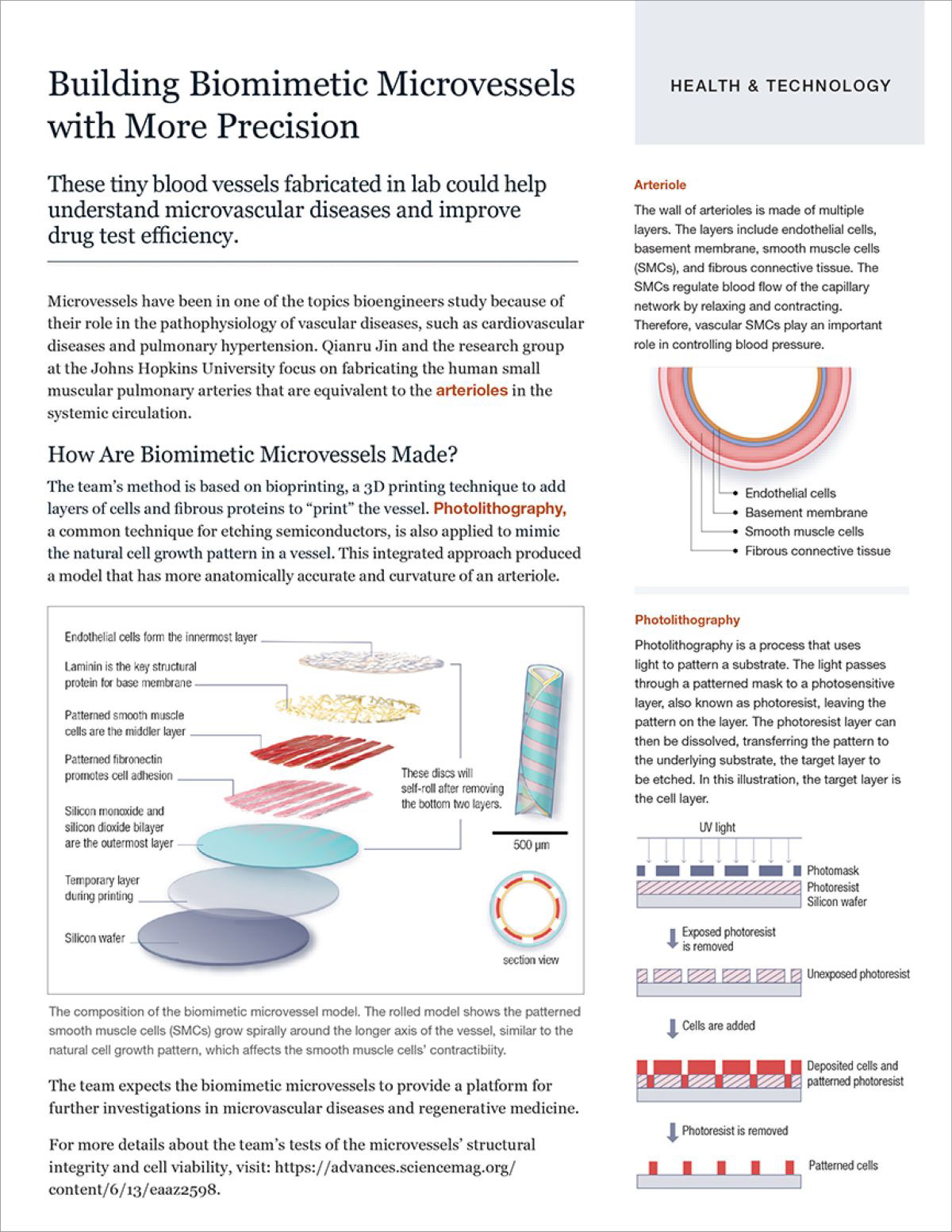
Microvessels play a key role in the development and progression of vascular diseases, including cardiovascular diseases and pulmonary hypertension. At Johns Hopkins University, Qianru Jin and her research team engineered human small muscular pulmonary arteries that function similarly to arterioles, the small branches of arteries found in the body’s systemic circulation. This breakthrough not only helps us better understand these diseases but also offers a potential direction for treatment.
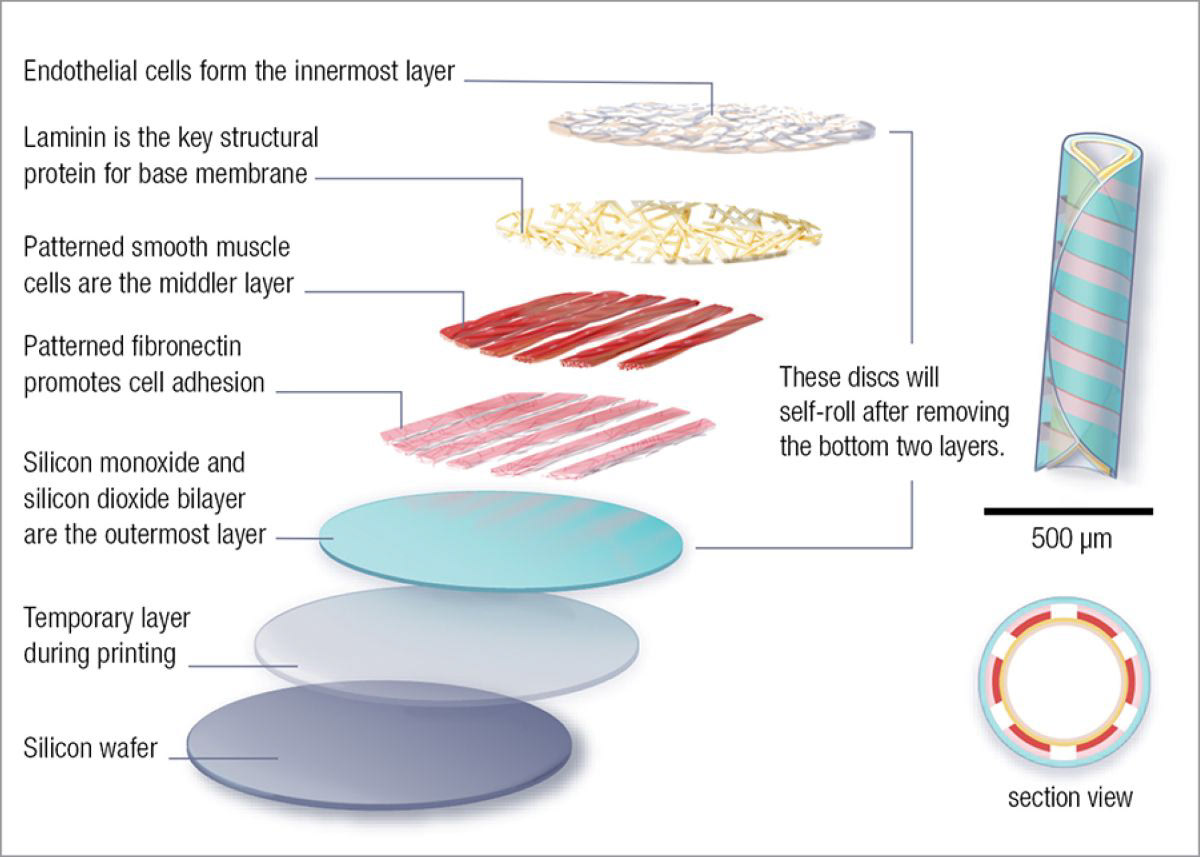
To make it easier for researchers to reach a broader audience, I created sample illustrations to show how these microvessels are built, along with side figures that illustrate the technology. The main illustration shows an exploded view of the blood vessel layers. Complementing this, the side figures in the publication mockup provide the context—the basic structure of a blood vessel and the principles of photolithography, a method that uses light to precisely pattern cell layers along the vessel wall. These visuals demonstrate the value of tailored illustrations in communicating complex scientific concepts to diverse audiences.
Reference
Jin, Q., Bhatta, A., Pagaduan, J. V., Chen, X., West-Foyle, H., Liu, J., ... & Romer, L.H. (2020). Biomimetic human small muscular pulmonary arteries. Science advances, 6(13), eaaz2598.
Jin, Q., Bhatta, A., Pagaduan, J. V., Chen, X., West-Foyle, H., Liu, J., ... & Romer, L.H. (2020). Biomimetic human small muscular pulmonary arteries. Science advances, 6(13), eaaz2598.
Copyright © 2020 Jin, Q., Bhatta, A., Pagaduan, J. V., Chen, X., West-Foyle, H., Liu, J., ... & Romer, L.H. Adapted under a Creative Commons Attribution Noncommercial License 4.0 (CC BY-NC).